


An elite, asynchronous REST API designed to bridge the gap between corporate financial data and environmental sustainability.
The Problem: Traditional lenders lack the specialized data models to accurately assess the financial risk of sustainability-focused projects, creating a "green financing gap."
The Solution: This platform acts as a BaaS backend, actively ingesting live corporate registry data from OpenCorporates, cross-referencing it against UK national energy and regional emissions datasets to gain ESG analytics, and dynamically generating Sustainability-Linked Loan (SLL) quotes.
As per the COMP3011 coursework requirements, all formal academic justifications and comprehensive technical manuals are located within this repository:
- 📄 Technical Report (PDF): Academic justification of the tech stack, architectural design choices, GenAI usage logs, and evaluation of limitations.
- 📄 API Documentation (PDF): The formal OpenAPI specification, documenting all endpoints, parameters, request/response JSON payloads, and error codes.
- 📘 Developer Wiki: The operational manual containing the Development Setup Guide, CI/CD Automation Guide, Testing Strategy, and Agile Project Management records.
This project strictly adheres to Domain-Driven Design (DDD) principles and features a robust separation of concerns between HTTP routing, business logic (Services), and database persistence (SQLAlchemy ORM).
- Core Framework: FastAPI (Asynchronous ASGI, OpenAPI 3.1)
- Database: PostgreSQL 18+ with SQLAlchemy 2.0 (asyncpg) and Alembic Migrations
- Caching Tier: Redis 8+ (In-memory caching with Base64 binary serialization)
- Package Management:
uv(Deterministic, ultra-fast dependency resolution) - Media Generation: ReportLab (Dynamic PDF) & Python Native
csv - Testing: Pytest with advanced
unittest.mockpatching (100% Branch Coverage) - DevOps: Docker Compose, GitHub Actions (CI/CD), GHCR Immutable Artifacts
graph TD
    Client([Client / Swagger UI]) -->|HTTP REST| API[FastAPI Server]

    subgraph Containerized Backend
        API -->|Async I/O| Cache[(Redis Cache)]
        API -->|SQLAlchemy 2.0| DB[(PostgreSQL 18)]

        subgraph Business Logic
            API -.-> MathEngine[ESG Simulation Engine]
            API -.-> PDFService[ReportLab PDF Generator]
        end
    end

    API -->|Live Entity Verification| External[OpenCorporates API]
    MathEngine -.-> MacroData[UK Gov Emissions & Grid Data]
The API calculates an Environmental Performance Score (EPS) and issues interest rate discounts (Margin Ratchets) based on ESG materiality weightings adapted from the MSCI/Refinitiv framework.
The core logic operates as a pure, mathematically isolated function:
This platform is engineered for modern, containerized workflows. To guarantee deterministic execution, ensure your local development environment meets the following requirements before cloning the repository:
Required Software & Tooling:
- Python 3.12: Installed and configured in your system PATH.
- uv (Astral): Our primary package manager. It replaces
pipandpoetry, reading the provideduv.lockfile to install the exact dependency tree in milliseconds. - Docker & Docker Compose: Essential for spinning up the isolated
green-fintech-db(PostgreSQL) andgreen-fintech-cache(Redis) containers without polluting your host machine. - Git: For version control and cloning the repository.
- IDE: Visual Studio Code (VS Code) or any equivalent modern IDE.
- Local PostgreSQL Client (Optional): While Docker runs the database engine, having local
psqltools can be helpful for direct inspection. - GitGuardian (Optional): Recommended for local secret scanning to prevent accidental token commits.
Target Machine Specification (Certified Local Environment):
The local orchestration scripts and hybrid container configurations were designed and verified against the following Linux development environment:
- OS: Linux Mint 22.3 (Ubuntu 24.04 base) | Kernel 6.17.0 x86_64
- Compute: AMD Ryzen 5 7520U (Quad Core, Boost 4.3GHz) | 32.0 GB Physical RAM
- Compiler/Runtime: GCC v13.3.0 | Python 3.12
To actively ingest live corporate data, this project requires an OpenCorporates API Key.
As an academic project, you qualify for their Public Benefit tier. You must create an account and submit the Public Benefit Projects Form using your university or organizational email address.
- Rate Limits: At the time of this documentation, the Public Benefit tier allows for up to 10,000 calls per day and 50,000 calls per month.
- Licensing & Attribution: OpenCorporates data is provided under strict open-data licenses. If you publish or publicly deploy this project, explicit attribution to OpenCorporates is legally required. Please review their Self-Service API Terms of Service and General Terms of Use.
To pull the regional static emissions data metrics, navigate to the public, open-source UK local authority and regional greenhouse gas emissions statistics, 2005 to 2023 or newer.
- Download the MS Excel Spreadsheet: Verify that sheet '1_1' adheres to and contains 'Table 1.1: Local authority territorial greenhouse gas emissions estimates 2005-2023 (kt CO2e) - Full dataset'
- Modify
scripts/seed_db.pyif named otherwise: Update the sheet name on line 109 to the correct name:sheet_name="1_1".
To adhere to the Single Responsibility Principle and avoid massive, unreadable bash files, the project's DevOps automation is heavily decomposed into the scripts/ directory:
exec.sh: The master interactive orchestrator menu. It manages global tasks like linting, workspace purging, and executing tests.scripts/api-helper.sh: Manages FastAPI container lifecycles, Uvicorn hot-reloading, and the interactive REST CRUD demonstration.scripts/pg-helper.sh: Handles Alembic state synchronization, database wiping, schema upgrades, and mock data seeding.scripts/rd-helper.sh: Manages Redis cache diagnostics and cache flushing.
The master exec.sh orchestrator completely abstracts the complexity of database migrations, network mapping, and package installation.
1. Clone the repository and navigate to the root:
git clone https://github.com/scAB1001/green-fintech-baas.git
cd green-fintech-baas
2. Environment Configuration:
The application requires specific environment variables to connect to the database, cache, and external APIs. Create a local .env file from the provided template:
cp .env.example .env
Ensure your .env contains at least the following baseline configurations (inserting your OpenCorporates key):
# .env
API_KEY=sk_test_greenfintech_123456
ENVIRONMENT=development  # or production
PROJECT_NAME="Green FinTech BaaS Simulator"
VERSION="1.3.0"

# Database Configuration (Matches compose.yaml)
POSTGRES_USER=postgres
POSTGRES_PASSWORD=postgres
POSTGRES_DB=green_fintech
POSTGRES_PORT=5432
POSTGRES_INITDB_ARGS=--auth=scram-sha-256
DATABASE_URL=postgresql+asyncpg://postgres:postgres@localhost:5432/green_fintech

# Redis Configuration
REDIS_PASSWORD=dev_password
REDIS_URL=redis://:dev_password@localhost:6379

# External APIs
OPENCORPORATES_API_KEY=your_development_key_here
3. Initialize the Python Workspace:
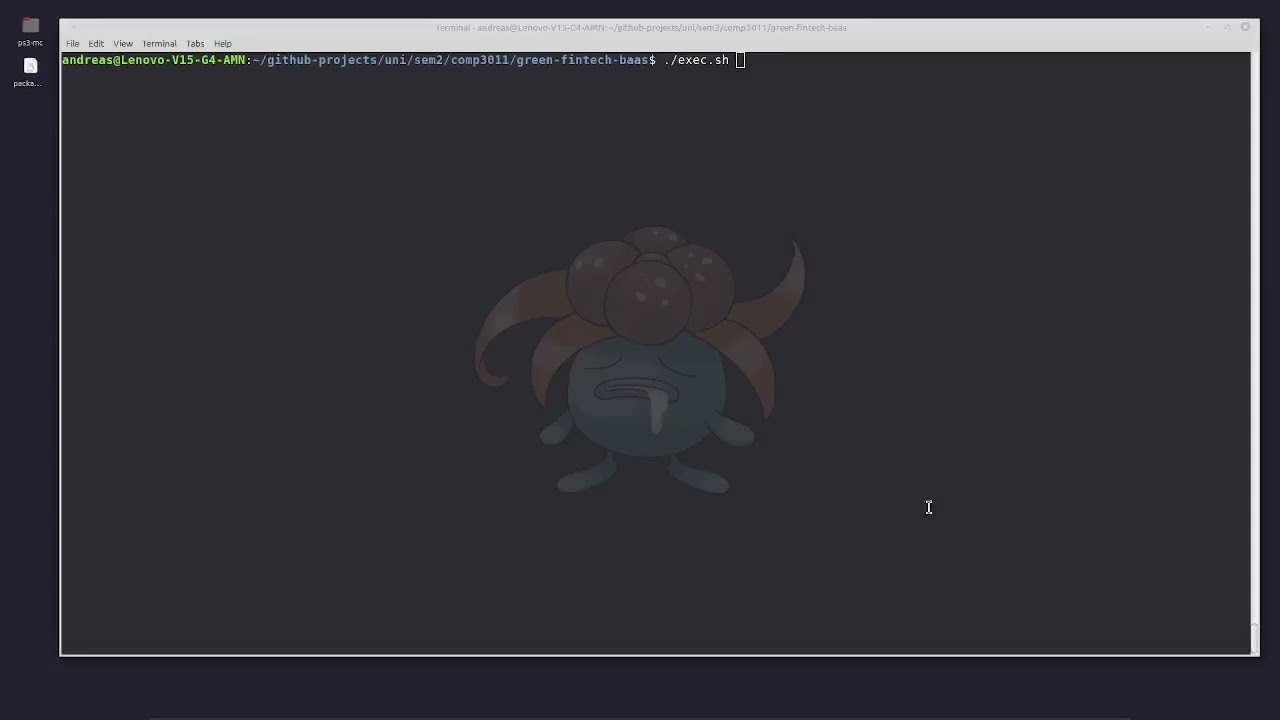
It should look like this:
# Make the bash (*.sh) scripts executable
chmod +x ./exec.sh scripts/common.sh scripts/pg-helper.sh scripts/rd-helper.sh scripts/api-helper.sh

# Utilizes 'uv' to instantly read the lockfile, install all dependencies, and configure Git hooks
./exec.sh init
4. Boot the Complete System Stack:
# Builds the Docker network from scratch. It spins up the PostgreSQL database,
# the Redis cache, and the FastAPI service. It will interactively prompt you
# to run Alembic migrations and seed the database with mock entities.
./exec.sh stack
The system is now fully operational.
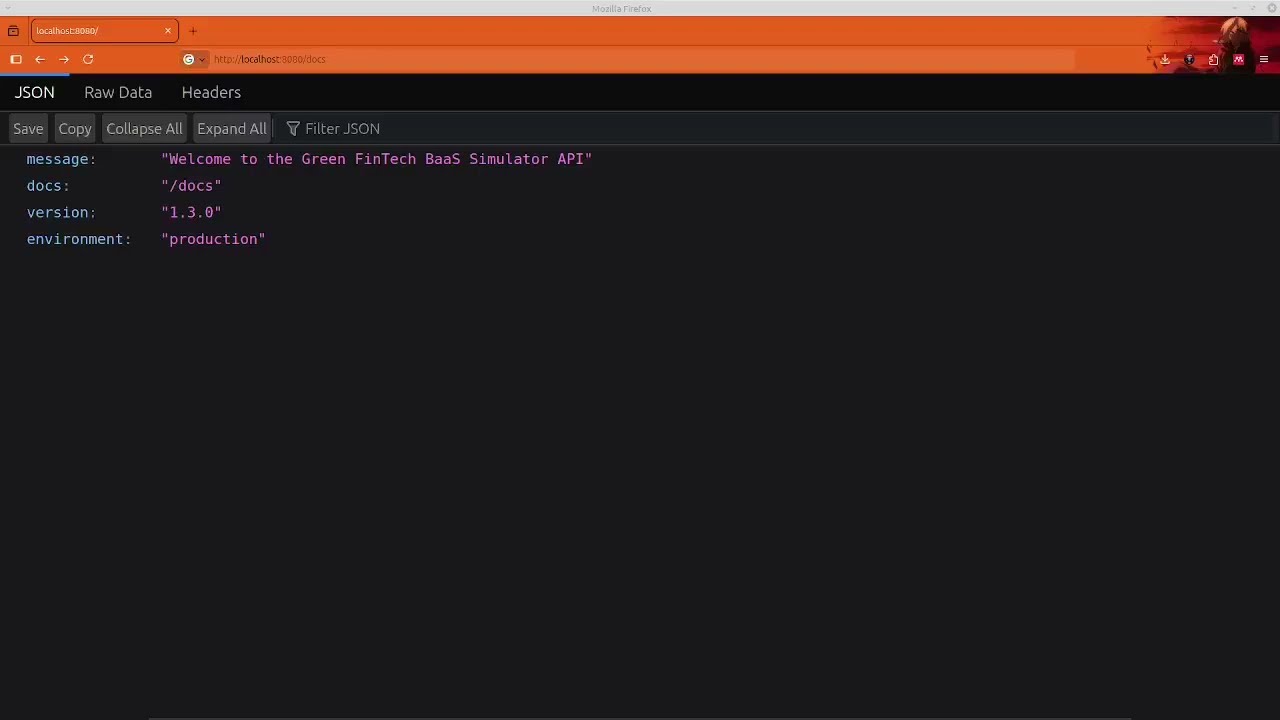
- Interactive API Documentation:
http://localhost:8080/docs - Test the complete CRUD lifecycle: Run
./exec.sh api-demoin a new terminal to watch the system ingest companies, calculate SLL loans, render PDFs, and cascade deletions in real-time.
The API exposes 8 primary endpoints mapped to the Company domain. For full request/response payloads, please refer to the attached API_Documentation.pdf.
| Method | Endpoint | Description | Cache Behavior |
|---|---|---|---|
POST |
/api/v1/companies/ |
Ingests live data from OpenCorporates | Triggers Cache Invalidation |
GET |
/api/v1/companies/ |
Paginated list of all corporate entities | Cached (List Pattern) |
GET |
/api/v1/companies/{id} |
Fetch a specific company's details | Cached (Entity Pattern) |
PATCH |
/api/v1/companies/{id} |
Update specific corporate fields | Triggers Cache Invalidation |
DELETE |
/api/v1/companies/{id} |
Hard delete entity and cascade relations | Triggers Cache Invalidation |
POST |
/api/v1/companies/{id}/simulate-loan |
Executes ESG math engine for a loan quote | No Cache (State Mutation) |
GET |
/api/v1/companies/export/csv |
Generates a bulk text/csv database dump |
Cached (Text) |
GET |
/api/v1/companies/{id}/simulate-loan/{sim_id}/pdf |
Renders an application/pdf formal quote |
Cached (Base64 Binary) |
The test suite mathematically proves the integrity of the database schema (unique constraints, cascading deletes), data boundaries (Pydantic validation), and business logic (cache hits/misses, external API fallbacks).
Run the complete unit & integration test suite (Pytest):
# Interactive to provide choices to test for coverage or to specify files/markers to test.
./exec.sh test
Run the automated end-to-end architecture diagnostic:
# Proves PostgreSQL, Redis, and FastAPI are communicating successfully
./exec.sh e2e
.
├── src/app/
│   ├── api/v1/endpoints/  # FastAPI Routers (HTTP Layer)
│   ├── core/              # Global configs (Logger, Redis connection pools)
│   ├── models/            # SQLAlchemy 2.0 ORM definitions (Database Layer)
│   ├── schemas/           # Pydantic validation boundaries (Network Layer)
│   └── services/          # Pure Business Logic & External API orchestrators
├── scripts/               # Decomposed DevOps and Orchestration helpers
├── tests/                 # Pytest suite (Unit & Integration)
├── .github/workflows/     # CI/CD Pipelines (Security, Release, Testing)
├── Dockerfile             # Multi-stage FastAPI container definition
├── compose.yaml           # Local hybrid infrastructure network
├── pyproject.toml         # UV dependency tree
└── exec.sh                # Master interactive developer utility script
While the current BaaS simulator is fully operational, a production-grade deployment would require the following evolutionary steps:
- OAuth2 / OpenID Connect: Implementing strict JWT-based authentication and Role-Based Access Control (RBAC) to differentiate between Bank Admins and Corporate Borrowers.
- Advanced Rate Limiting: Applying Redis-backed token bucket algorithms to protect the API from DDoS attacks and manage OpenCorporates API quota consumption.
- Event-Driven Architecture: Decoupling the PDF rendering engine into a background Celery or RabbitMQ worker queue to completely unblock the FastAPI event loop during high-load concurrency.
- Remote Deployment: Publishing the project to a service like Railway or MCP for public use and demonstration.
Developed by @scAB1001, aided by AI models as per code: GREEN for AI usage.
Submitted as coursework for the 2026 academic year.
Academic project - University of Leeds COMP3011 - Licensed under GPL-3.0