Salifort Motors - Predicting Employee Turnover and Improving Retention: End-to-End Analysis and Modeling
This project explores how employee-related factors such as workload, satisfaction, tenure, and promotions influence the likelihood of employee attrition at Salifort Motors, a leading alternative energy vehicle manufacturer, using machine learning in Python. By analyzing relationships between these factors and attrition outcomes, I built predictive models including logistic regression, decision trees, and random forests to identify employees at risk of leaving and support proactive HR interventions. The goal is to provide data-driven insights that enhance retention strategies and reduce attrition costs. The project leverages Python libraries like pandas, scikit-learn, and matplotlib for data analysis, predictive modeling, and visualization.
To complement the machine learning analysis, an interactive multi-page Power BI report was developed to translate analytical findings into business-focused insights. The report highlights workforce trends, attrition drivers, predictive model outcomes, and strategic retention recommendations, enabling stakeholders to explore key factors influencing employee turnover through an executive-friendly reporting experience.
- 📓 Complete Salifort Case Study Notebook (Kaggle)
- 💼 Power BI Report - Project Drive Folder
- 📄 Power BI Report PDF
- 🎥 Power BI Report Walkthrough Video
- 📊 Power BI Report File (.pbix)
For clarity and easier navigation on GitHub, the project is divided into two logical parts, allowing viewers to focus on either Exploratory Data Analysis or Modeling without the notebook becoming too lengthy or cumbersome.
-
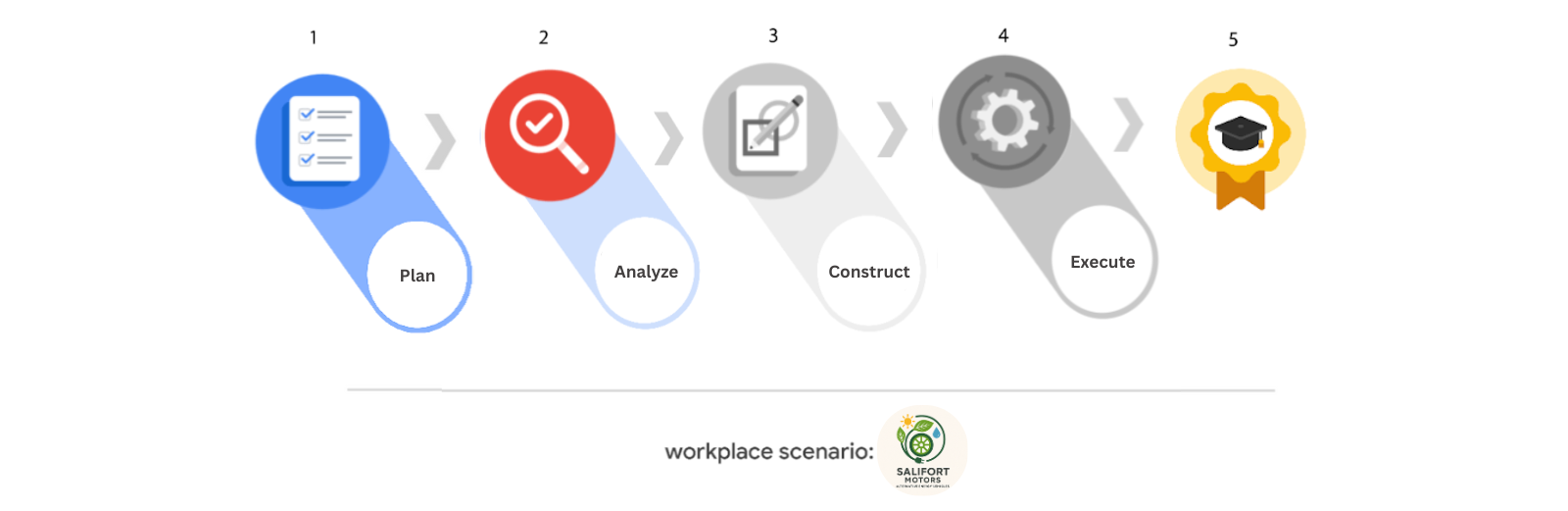
Part 1 – Plan and Analyze Stages: This notebook covers stakeholder alignment, data cleaning, and exploratory data analysis (EDA), uncovering key trends in employee satisfaction, workload, and attrition.
-
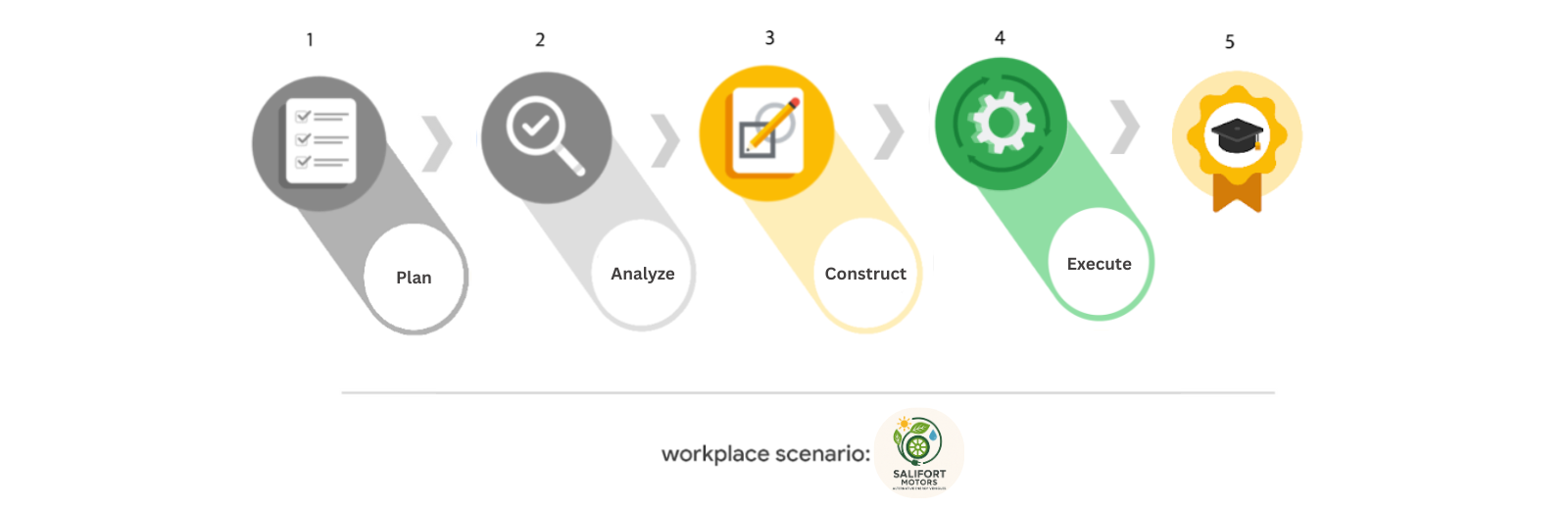
Part 2 – Construct and Execute Stages: This notebook transitions to predictive modeling, comparing logistic regression with tree-based models (decision trees and random forests) to select the best-performing solution for turnover prediction. The Execute stage also includes the development of a multi-page Power BI report that translates analytical findings, model insights, and retention recommendations into an executive-friendly reporting experience.
For a complete and consolidated view of both parts in a single notebook, check out the project on Kaggle or Github
-
Complete Project Notebook (.ipynb): Consolidated end-to-end Salifort Motors case study covering the full PACE workflow, including business understanding, data cleaning, exploratory data analysis, statistical investigation, machine learning modeling, model evaluation, and retention recommendations.
-
Project Parts Notebooks (.ipynb): Two separate notebooks organized by the PACE framework:
- Part 1 – Plan & Analyze: Stakeholder alignment, data preparation, data validation, and exploratory data analysis.
- Part 2 – Construct & Execute: Predictive modeling, model evaluation, champion model selection, and reporting deliverables.
-
Trained Machine Learning Models (.pickle): Saved Logistic Regression, Decision Tree, and Random Forest models developed throughout the project for reproducibility and future deployment.
-
Supporting Data Files (.xlsx): Processed datasets and supporting files used for analysis, validation, reporting, and dashboard development.
-
PACE Framework Documentation (.pdf): Project proposal, executive summary, and stage-specific PACE documents covering the Plan, Analyze, Construct, and Execute phases of the project.
-
Power BI Analytics Report File (.pbix): Interactive four-page Power BI analytics report exploring workforce trends, attrition drivers, predictive modeling outcomes, and strategic retention recommendations.
-
Complete Power BI Analytics Report (.pdf): Full four-page PDF export of the interactive Power BI report for convenient offline viewing, sharing, and presentation.
-
Power BI Report Page Exports (.pdf): Individual PDF exports of each report page for documentation, presentation, and quick reference.
-
Power BI Report Walkthrough Video: Demonstration of report navigation, interactivity, analytical findings, predictive model insights, and business recommendations.
-
Power BI Report Assets: Supporting report screenshots, visual assets, page exports, and additional resources used throughout the reporting and documentation process.
The Salifort Motors Employee Attrition Analysis project aims to:
- Analyze Attrition Drivers: Examine how factors like workload, job satisfaction, tenure, and promotions influence employee turnover
- Assess Data Patterns & Risks: Identify trends, outliers, and key predictors associated with increased attrition risk
- Build Predictive Models: Develop logistic regression, decision tree, and random forest models to predict which employees are likely to leave
- Support Proactive HR Strategy: Provide actionable, data-driven recommendations to reduce attrition rates and improve employee retention
- Ensure Ethical, Bias-Aware Analysis: Address data quality issues and avoid post-attrition information leakage to maintain fair, reliable insights
- Develop Executive Reporting Solutions: Design a multi-page Power BI report that translates analytical findings, predictive model insights, and retention recommendations into an interactive, stakeholder-friendly reporting experience
The dataset contains 15,000 employee records from Salifort Motors, each representing a unique employee and their work-related attributes. Key features include:
- satisfaction_level: Employee’s self-reported job satisfaction score (continuous: 0–1)
- last_evaluation: Most recent performance review score (continuous: 0–1)
- number_project: Number of projects assigned to the employee (discrete integer)
- average_monthly_hours: Average hours worked per month (continuous)
- tenure: Total number of years the employee has spent at the company (discrete integer)
- work_accident: Indicates whether the employee experienced a workplace accident (binary: 0 = No, 1 = Yes)
- promotion_last_5years: Whether the employee was promoted in the last five years (binary: 0 = No, 1 = Yes)
- department: Employee’s functional department (categorical: e.g., Sales, IT, HR)
- salary: Salary tier categorized as low, medium, or high (categorical)
- left: Target variable indicating if the employee left the company (binary: 0 = Stayed, 1 = Left)
This dataset serves as the foundation for analyzing employee attrition patterns at Salifort Motors and building machine learning models to identify employees at risk of leaving, enabling proactive, data-driven HR retention strategies.
- Confirmed no missing values across all features
- Removed 3,008 duplicate entries (20% of dataset) to ensure data integrity
- Handled outliers in
tenureusing the IQR method, removing 824 extreme cases - Encoded categorical variables:
- Ordinal encoding for
salary(low=0, medium=1, high=2) - One-hot encoding for
department
- Ordinal encoding for
- Workload Analysis: Employees with 7 projects all left (critical risk threshold)
- Tenure Trends: 4-year tenure employees showed lowest satisfaction
- Hours vs Satisfaction: Revealed two attrition clusters:
- Overworked (high hours, low satisfaction)
- Disengaged (low hours, low satisfaction)
- Departmental Attrition: HR had highest turnover rate; Management had lowest
- Satisfaction Correlation: Strong negative relationship with attrition (r=-0.35)
- Promotion Impact: Only 2.1% of employees promoted in last 5 years
- Evaluation Paradox: High performers working long hours still left (burnout risk)
- Served as the baseline model for employee attrition prediction.
- Assumptions Evaluation: All assumptions for logistic regression were evaluated, confirming the model’s suitability.
- Performance Evaluation: Assessed using both AUC ROC and AUC PR to account for class imbalance:
- Overall Accuracy: 82%
- AUC ROC: 0.86
- AUC PR: 0.46 (indicating limited performance for the minority class)
- Precision-Recall Trade-off: The model showed low recall for employees who left, highlighting the class imbalance issue.
Two rounds of modeling were conducted to address potential data leakage:
- Round 1: Initial models including all features, such as
satisfaction_levelandaverage_monthly_hours - Round 2: Refined models after removing leakage-prone features and creating the
overworkedindicator
- Round 1 (All Features):
- Best Parameters:
max_depth=4,min_samples_leaf=5 - CV ROC AUC: 0.9698
- Test Recall: 91.4%
- Best Parameters:
- Round 2 (Leakage-Adjusted):
- Best Parameters:
max_depth=6,min_samples_leaf=2 - CV ROC AUC: 0.9587 (1.1% drop)
- Test Recall: 91.8% (maintained strong performance)
- Demonstrated robustness despite removing key features
- Best Parameters:
- Round 1 (All Features):
- Best Parameters: 500 estimators,
max_depth=5 - CV ROC AUC: 0.9804 (top performer)
- Test Recall: 92.0%
- Best Parameters: 500 estimators,
- Round 2 (Leakage-Adjusted):
- Best Parameters: 300 estimators,
max_depth=5 - CV ROC AUC: 0.9648 (1.6% drop)
- Test Recall: 90.4% (still excellent)
- Champion Model: Selected due to:
- Minimal performance degradation (1.6% AUC drop)
- Better generalization than Decision Tree
- More stable feature importance rankings
- Best Parameters: 300 estimators,
- The 1-2% performance drop between rounds confirms some predictive power came from leakage-prone features
- Despite this, both tree-based models maintained >90% recall in Round 2
- Random Forest showed more consistent performance across rounds, making it more reliable for deployment
This two-round approach validated that our final models make predictions based on stable, non-leaky features while maintaining strong performance.
- Addressed data leakage by removing post-attrition indicators
- Prioritized recall to minimize false negatives (missed at-risk employees)
- Used stratified sampling to maintain class balance in train/test splits
To translate analytical findings into a stakeholder-friendly format, a multi-page Power BI analytics report was developed as part of the Execute stage, combining workforce analytics, predictive modeling insights, and strategic retention recommendations into an executive-focused reporting experience.
- Executive Overview: Summarized workforce composition, attrition trends, tenure patterns, salary distribution, and departmental performance
- Workload & Burnout Analysis: Explored the relationship between project load, working hours, promotions, performance evaluations, and employee turnover
- Predictive Attrition Modeling: Presented model performance metrics, confusion matrix results, feature importance analysis, and champion model selection
- Strategic Retention Recommendations: Converted analytical insights into actionable retention initiatives, high-risk employee profiles, and expected business outcomes
- Interactive Exploration: Incorporated slicers, drill-down capabilities, and contextual tooltips to support stakeholder decision-making
- Overworked employees: Those working >175 hrs/month had 3× higher attrition
- Mid-tenure risk: Employees with 4–6 years tenure showed the lowest satisfaction
- Promotion gap: Only 2.1% of employees were promoted in the last 5 years
| Model | Accuracy | Recall (Leavers) | Precision (Leavers) |
|---|---|---|---|
| Logistic Regression | 82% | 26% | 44% |
| Decision Tree | 94% | 92% | 78% |
| Random Forest | 96% | 90% | 87% |
Random Forest emerged as the champion model, balancing high recall (minimizing false negatives) with strong precision.
- High workload (
overworked) - Low promotions (
promotion_last_5years) - Long tenure without growth (
tenure) - Departmental trends (HR highest attrition)
- Comprehensive Workforce Analysis: Uncovered critical attrition patterns including the "4-year slump" in employee satisfaction and the 7-project burnout threshold
- High-Performance Predictive Model: Developed a Random Forest classifier with 90.4% recall for at-risk employees while maintaining 87% precision
- Actionable Risk Indicators: Identified four key attrition drivers: performance scores, project load, tenure duration, and overwork status
- Ethical AI Implementation:
- Addressed data leakage by removing post-attrition indicators
- Balanced model performance with interpretability for HR stakeholders
- Established protocols for fair application of predictive insights
- Strategic Visualization Suite: Created intuitive dashboards showing:
- Departmental turnover hotspots
- Workload vs satisfaction tradeoffs
- Tenure-based retention opportunities
- Executive Power BI Analytics Report:
- Developed a four-page interactive Power BI report covering workforce trends, attrition drivers, predictive modeling outcomes, and strategic retention recommendations
- Translated complex machine learning results into stakeholder-friendly insights through KPI cards, interactive visuals, model evaluation summaries, and business-focused reporting
- Operational Readiness: Designed model outputs to integrate directly with HRIS systems for real-time risk alerts
This end-to-end solution transforms raw employee data into strategic retention opportunities, enabling Salifort Motors to proactively address turnover risks while maintaining ethical AI standards. The combination of robust analytics and actionable business intelligence creates a new capability for data-driven workforce management.
The Power BI analytics report was developed to translate exploratory analysis, predictive modeling results, and retention recommendations into an executive-friendly reporting experience.
The report includes:
- Executive Overview (Page 1)
- Workload & Burnout Drivers (Page 2)
- Predictive Attrition Modeling (Page 3)
- Strategic Retention Recommendations (Page 4)
The report combines workforce analytics, machine learning insights, interactive visualizations, and business-focused storytelling to support data-driven HR decision-making.


- Address class imbalance with techniques like SMOTE or class weighting.
- Incorporate additional features like manager feedback or team dynamics.
- Operationalize the predictive model within HR systems to enable automated employee risk scoring, monitoring, and proactive retention interventions.
- Python: pandas, NumPy, scikit-learn, Matplotlib, Seaborn
- Business Intelligence: Power BI, Power Query, DAX
- Machine Learning: Logistic Regression, Decision Trees, Random Forest
- Model Evaluation: Precision-Recall AUC, ROC AUC, F1-score, Confusion Matrix
- Data Visualization: Matplotlib, Seaborn, Power BI
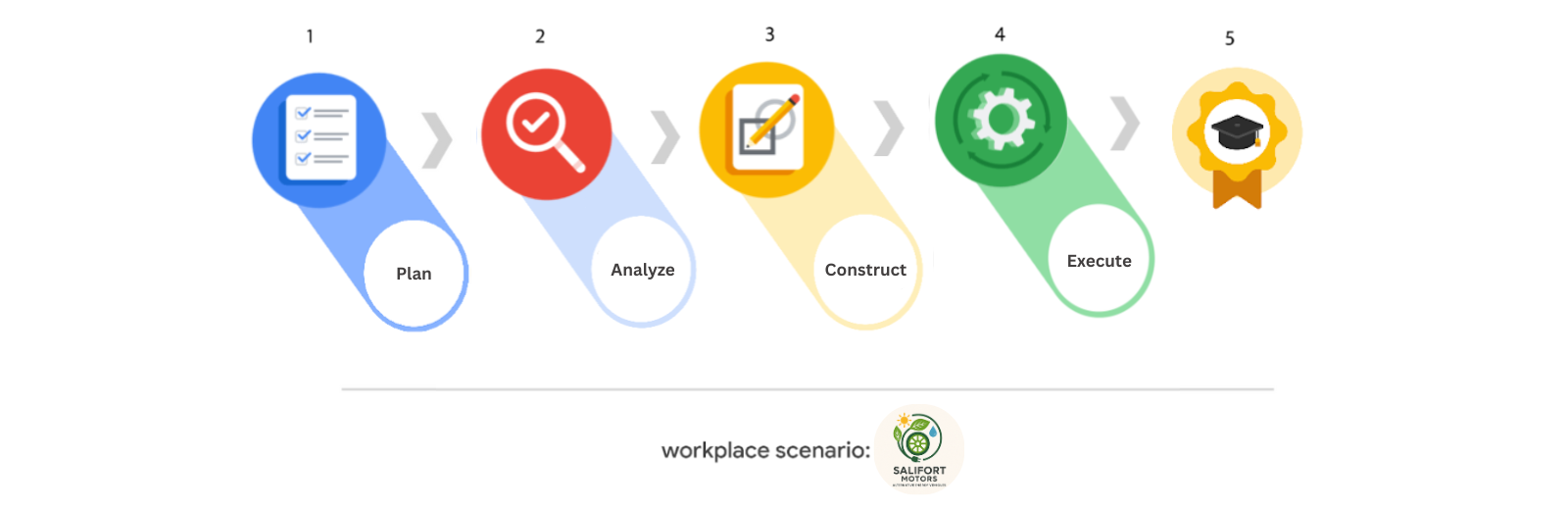
- Workflow: PACE (Plan, Analyze, Construct, Execute) framework
├── Fit_models
│   ├── hr_dt1.pickle
│   ├── hr_dt2.pickle
│   ├── hr_log_clf.pickle
│   ├── hr_rf1.pickle
│   └── hr_rf2.pickle
├── Power BI Report Assets
│   ├── Images - Salifort Motors Employee Attrition Analytics Report in Power BI
│   ├── PDFs - Salifort Motors Employee Attrition Analytics Report in Power BI
│   └── Supporting files
├── Project Parts
│   ├── Salifort_Motors_Turnover_Part1_Plan_and_Analyze_Includes_EDA.ipynb
│   └── Salifort_Motors_Turnover_Part2_Construct_and_Execute_Includes_Modeling.ipynb
├── Salifort Motors Predicting Employee Turnover and Improving Retention Documents
│   ├── All Stages - PACE Strategy Document.pdf
│   ├── Plan Stage - PACE Strategy Document.pdf
│   ├── Analyze Stage - PACE Strategy Document.pdf
│   ├── Construct Stage - PACE Strategy Document.pdf
│   ├── Execute Stage - PACE Strategy Document.pdf
│   ├── Salifort Motors Employee Turnover Prediction Project Proposal.pdf
│   └── Salifort Project - Executive Summary.pdf
├── Power BI Report - Salifort Motors Employee Attrition Analytics Report.pbix
├── Power BI Report PDF - Salifort Motors Employee Attrition Analytics Report.pdf
├── Video - Power BI Report - Salifort Motors Employee Attrition Analytics Report.mp4
├── Salifort_Motors_Predicting_Employee_Turnover_and_Improving_Retention.ipynb
└── README.md
This project equips Salifort Motors with actionable insights to reduce turnover, improve employee satisfaction, and optimize retention strategies. By proactively identifying at-risk employees, HR can intervene early, fostering a more stable and engaged workforce. The accompanying Power BI analytics report further enhances decision-making by translating workforce trends, attrition drivers, predictive model outcomes, and retention recommendations into an accessible, executive-friendly reporting experience.