/ framework / bedrock / working / cosmos / spectrum / tools /

Mode Identity Theory starts with a simple bet: fundamental physics is not missing more ingredients, it's missing better boundary conditions. Instead of changing Einstein's equations or calling numbers accidents, MIT asks: what follows when form comes before function?
What began as an inadvertent search query turned philosophy, turned topology, turned theory. What followed were the constants of the universe popping out like some sort of cosmic game genie. None of this was planned...
Topology is structure, and de Broglie’s wave becomes fundamental; matter appears when the wave is sampled. The observer is part of that realization, not external to it; time ticks in phase, not in the background.
In 300 BC, Euclid proved Plato's observation that only five solids close perfectly in space. In October 2026, ESA's Euclid telescope will ask what geometry gives the universe its shape. MIT is betting on one shape, one wave, one equation, one formula, one identity, and one interface. The rest; is accounting.
mode-identity-theory/
├── main/                           # this page
└── files/
    ├── framework/                  # the postulate: the topology, scaling law, derivations
    │   ├── bedrock/                 # standalone mathematics papers
    │   │   ├── first-eigenvalue       # twisted Möbius Laplacian: first-positive 2/R²
    │   │   └── coexact-gap            # coexact gap on S³/Γ: McKay distance, the 2I exception
    │   └── working/                 # research in progress: orienting maps and open problems
    ├── cosmos/                     # the static three-sphere seen whole
    │   ├── cosmological-constant      # Λ as the surface first-positive eigenvalue
    │   ├── dark-energy                # the acceleration scale a₀ on the phase clock
    │   ├── hubble-tension             # H₀ as an edge mode, the topological 8.4%
    │   ├── cmb-anomalies              # low-ℓ suppression as the Molien gap
    │   ├── early-galaxies             # early massive galaxies in a static geometry
    │   ├── black-holes                # black holes as topological nodes of the wave
    │   └── euclid-dr1                 # the falsification gate
    ├── spectrum/                   # the near boundary: matter and gauge on S³/2I
    │   ├── yang-mills                 # confinement and the mass gap, the 2I exception
    │   ├── mass-spectrum              # fermion masses as positions on the McKay lattice
    │   ├── fine-structure             # α = 1/137 in the first Fibonacci well, one step of Λ
    │   ├── the-mirror                 # the edge interference that samples the wave
    │   └── the-waltz                  # the Waltz clock: phase to time on the temporal edge
    └── tools/                      # interactive: topology viewer, calculator
/ framework / bedrock / working / cosmos / spectrum / tools /
🏟️ One Shape:
Your belt has two surfaces and two edges that never meet. Twist it once and buckle it again. Suddenly you have a single surface and a single edge: the Möbius strip. Now scale that surface to universal size and embed it in the only simply connected closed 3-manifold that exists.
The 3‑sphere itself wasn't just empty. It comes with a native grid of 120 equally spaced positions, the maximum symmetry the space can permit.
Ψ One Wave:
The universe samples a standing wave. The mathematics requires it. It began as cosine, full amplitude, and we advanced from there.
The Möbius twist forces a sign‑flip: the fundamental mode is
Most wave patterns cancel while certain modes survive. The ones that come back are fermionic, the wave patterns where matter is sampled.
⚖️ One Equation:
Two questions determine any constant in the universe: where are you on the wave, and how deep in the domain are you sampling?
Not all 120 positions on the grid are equal. Some are more stable than others, places where the wave can settle long enough to matter. The golden ratio
The universe has two boundaries: the cosmic horizon at the ceiling and the Planck length at the floor. Together they span 122 orders of magnitude, no longer a coincidence, it's the area of our domain. The observer stands at the geometric midpoint between the largest and smallest scale, the structural position where infinity over zero yields a defined result.
Three layers host different physics:
(n = 1) 1D Möbius edge: experienced as time when sampling
(n = 2) 2D Möbius surface: vibrating like a drum head and humming ambiently at
(n = 3) 3D space: no dimensional access to this volume, so we will never measure anything dark.
⚛️ One Formula:
Four factors compose to rank 24 fermion masses. Each factor does exactly one thing.
The Neutrino Floor.
The Kostant Sunflower.
The McKay Elevator.
The Reidemeister Torsion.
🔺 One Identity:
The binary icosahedral group
Faces.
Edges.
Vertices.
Three primes. Three stabilizers. Every force, every particle, every quantum number.
🪡 One Interface:
The wells, masses, charges, and gaps are structure stamped onto a smooth space that knows none of them by itself. Two seams pin that structure there: the Möbius surface embeds to set the vacuum
Gravity is not a fourth force hunting for its rung on the grid. It is what crosses between the smooth space below and the structure built above, coupling to both. The toll it pays at the vacuum seam is the factor
The two sides differ in kind: one smooth, one discrete. So gravity should not be expected to quantize as another force inside the grid. That is not the missing piece. It is the seam doing its job.
Two constants fix the units. The absolute scale is a calibration choice, not a privileged input: the hierarchy
Primitives
| Const. | Value | Origin |
|---|---|---|
| 299,792,458 m/s | Propagation rate on the temporal edge | |
|
|
Action quantum; converts mode number to energy |
Measured scales
| Scale | Value | Origin |
|---|---|---|
|
|
de Sitter scale |
|
|
|
Mass benchmark; the fermion ratios are structural, so this fixes only the normalization |
Phase parameter
| Parameter | Value | Origin |
|---|---|---|
|
|
Observer's current phase on the standing wave. |
Outputs of a fixed structure, checked against observation:
| Observable | Output | Observed | Agreement |
|---|---|---|---|
|
↗ |
~24% | ||
|
↗ |
|
|
order of magnitude |
|
↗ |
3/2 (gravitational cost) |
|
exact |
|
↗ |
topological ( |
topological protection holds | ✓ |
|
↗ |
no phantom crossing | DESI DR2 compatible | ✓ |
|
↗ |
|
Pantheon+ & DESI DR2 BAO | passed |
|
↗ |
negative, tied to |
awaiting next-gen BAO | open |
| ↗ CMB low-ℓ deficit | Molien gap, lands |
deficit below |
open (Rides on R) |
|
↗ |
~2% | ||
|
↗ |
8.4% lattice prediction | ~8.7% | mechanism open |
|
↗ |
0.184 | 0.183 | <1% |
|
↗ |
~2% | ||
|
↗ |
|
awaiting high-z rotation curves | open |
| ↗ Null dark matter | permanent | ongoing null results | ✓ |
| ↗ Mass gap | confinement observed | ✓ | |
| ↗ Fermion generations | 3 (mass gaps) | 3 | exact |
| ↗ Force count | 3 (grid exhaustion) | 3 | exact |
| ↗ Null SUSY | permanent | ongoing null results | ✓ |
| ↗ Spectral inaccessibility | no |
proved (Theorem 1, 8 lemmas) | exact |
|
↗ Color from |
singlet/triplet per irrep | 6/6 fermion assignments | exact |
|
↗ Domain from |
|
integer/half-integer split | exact |
|
↗ Weak isospin |
|
10/10 SM-assigned entries | exact |
| ↗ Eta sign gate | all SM-assigned entries | exact | |
| ↗ Fermion masses | 24 entries | 6/8 charged within ×3 ( |
comparison |
|
↗ |
|
|
~3% |
|
↗ |
|
|
6% |
|
↗ |
mass benchmark | 0.511 MeV | normalization |
| ↗ Rank 16 entry |
|
no known fermion | open |
| ↗ Dead zone | 6 states, eV to keV | no SM fermions in range | open |
|
↗ |
|
< 800 meV (KATRIN) | awaiting measurement |
|
↗ |
0.11622 | 0.11790 | 1.42% |
|
↗ |
0.03392 | 0.03378 | 0.41% |
|
↗ |
0.00733 | 0.007297 | 0.49% |
|
↗ |
3.426 (pure geometry) | 3.490 | ~2% |
The absolute mass scale and Λ are two ends of one loop: fix
$m_e$ and the topology gives Λ; fix Λ and it gives$m_e$ to ~2%. Inverting the closure, a 2% shift in$m_e$ moves Λ by ~11% under the default calibration, where$R$ (hence$\Omega_\Lambda$ ) is set by Λ, so$m_e \propto \Lambda^{11/60}$ once the$\mu_\Lambda$ scale and the$\Omega_\Lambda$ feedback are collected. Neither end is privileged: the closure is the mass-spectrum reading of the hierarchy, and the mass ratios are free of the absolute scale.
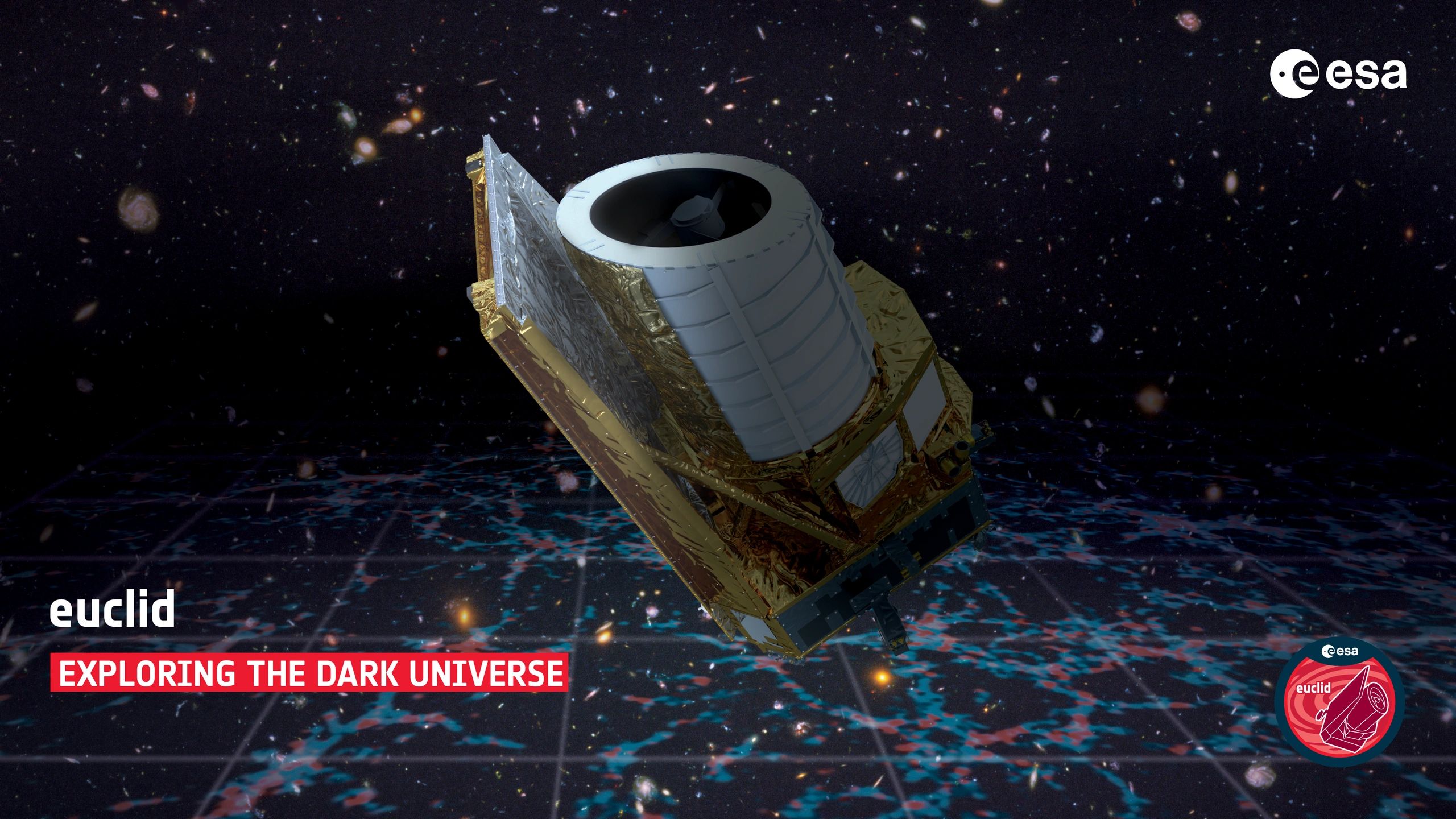
All predictions below were locked before Data Release 1 and deposited on Zenodo.
| Prediction | Value | Euclid DR1 channel | Falsified if |
|---|---|---|---|
|
|
|
Spectroscopic BAO across four |
Reconstructed |
|
|
|
Galaxy-galaxy weak lensing stellar-mass-halo-mass relation; photometric/spectroscopic galaxy samples for high-z scaling relations | Euclid DR1 galaxy-galaxy lensing and stellar-mass-halo-mass scaling show no enhancement consistent with the predicted |
|
|
|
Spectroscopic BAO ( |
Fiducial split gives |
| Stellar mass function at |
JWST-style massive galaxies persist in Euclid wide-area statistics; reachable with |
Wide-area photometric source catalog with high-z selection; NISP/ancillary spectroscopic confirmation where available | Abundance of |
|
|
Negative, magnitude |
Spectroscopic BAO precision across |
Coefficient positive at |
🔭 Judgment Day: October 21, 2026
Every link between topology and observable is live. The code is the math. There are no hidden knobs.

What you hold in your hand is not matter. It is where the wave resolved when you sampled it.
The thing is the sample. What matters is the wave Ψ
/ framework / bedrock / working / cosmos / spectrum / tools /