| marp | true |
|---|---|
| theme | academic |
| paginate | true |
| header | IPv6 for Leaders Workshop |
| footer | © 2026 IEISI: CC BY-NC-SA 4.0 | tcs@ieisi.org | www.ieisi.org |

- IPv6 Basics in Business Terms
- Business Case for IPv6 Adoption
- Security Considerations
- Tracking Adoption with APNIC Labs
- IPv6 and Sustainable Development Goals
- Multi-Stakeholder Model and Governance
- Adoption Barriers and Solutions
- IPv6 Address Planning
- Deployment Planning
- Measuring Success and ROI
- Future-Proofing
- Learning & Development Strategy
- Next generation Internet Protocol
- Designed to replace IPv4
- 128-bit addressing (vs. 32-bit for IPv4)
- Enables the continued growth of the Internet
- Foundation for next-generation applications and services
Facilitator note: Keep technical detail out of this workshop. Your audience are managers and leaders — not engineers. If participants want to go deeper on protocol mechanics, packet headers, or implementation specifics, point them to the technical training track: github.com/IEISI-ORG/ipv6_training
- IANA global pool exhausted: Early 2011
- Regional registries (RIRs) at various stages of depletion
- Address markets emerging with rising costs
- Increasing use of workarounds (CGNATs, address sharing)
- Business impact: increased costs, reduced functionality


- Address space: 340 undecillion vs. 4.3 billion addresses
- Built-in security with IPsec
- Simplified header structure for better routing efficiency
- Auto-configuration capabilities
- Better support for mobile networks
-
IPv4: Conservation mindset
- Careful address allocation
- NAT as standard practice
- IP addresses as limited resource
-
IPv6: Abundance mindset
- Generous subnet allocation
- Direct end-to-end connectivity
- IP addresses as unlimited resource
- Preparing for Internet of Things expansion
- Supporting cloud-native architectures
- Enabling edge computing models
- Simplification of network management
- Elimination of NAT complexity
- Direct addressing for security and monitoring
- Market differentiation opportunities
- Avoiding last-minute rushed implementations
- Lower long-term costs with planned transitions
- Enhanced capability for innovative services
- Improved customer experience (especially mobile)
- Talent attraction and retention advantages
- IPv4 scarcity as barrier to internet growth
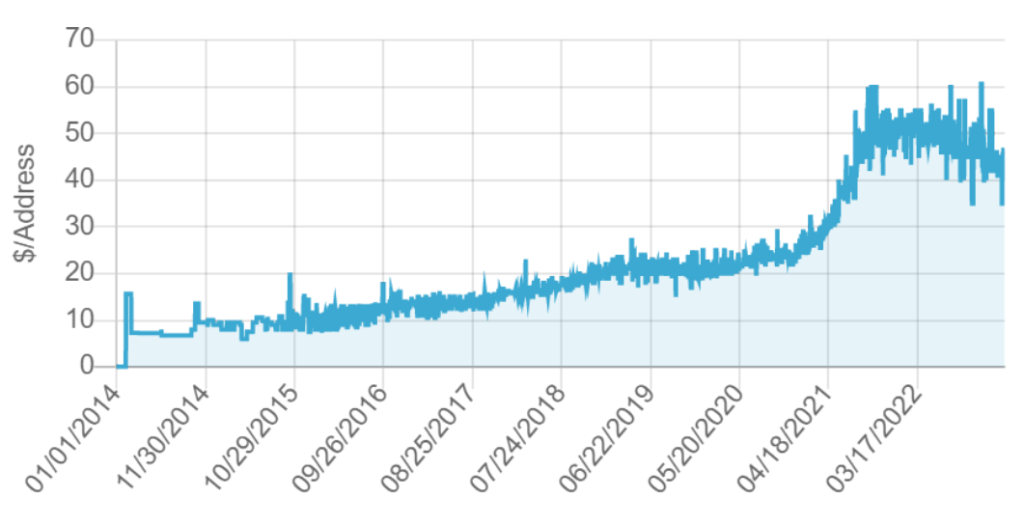
- IPv4 address prices: $60+ (2022 peak) → ~$20 (2025) — and still falling
- Service degradation from address sharing (CGNAT)
- Early-adopting regions hold vast legacy allocations — late adopters pay the "laziness tax"
- IPv6 eliminates regional inequity: IPv4 slows down growth. IPv6 enables it.
Source: IPv4 Address Sale Price Trends — Terry Sweetser, IEISI


- Defense in depth remains essential
- User authentication requirements unchanged
- Application security equally important
- Data encryption still necessary
- Monitoring and logging critical
- Direct addressing doesn't mean direct access
- Stateful and stateless firewalls remain essential
- Address plan segmentation for security zones
- Unique security considerations:
- Larger scanning space
- Extension header inspection
- Neighbor Discovery Protocol protection
- Security policy updates for IPv6
- Risk assessment for transition period
- Dual-stack security considerations
- Skills development for security teams
- Monitoring strategy adjustments
- Incident response procedure updates

- Current global IPv6 adoption: ~43% capable (APNIC Labs, March 2026)
- Leading countries: India (~78%), France (~86%), Germany (~74%), USA (~59%)
- Leading regions: South Asia, Europe, North America
- Mobile networks driving much of the adoption (Reliance Jio: India's leap)
- Pacific Islands: early stage — first-mover opportunity
- Wide variation in enterprise adoption

https://stats.labs.apnic.net/ipv6

https://stats.labs.apnic.net/ipv6

https://stats.labs.apnic.net/ipv6/QS
- Methodology: browser-based measurement
- Country and network-level statistics
- Historical trends and growth patterns
- Different measurement types:
- Preferred address selection
- DNS resolution capabilities
https://www.google.com/intl/en/ipv6/statistics.html

https://www.google.com/intl/en/ipv6/statistics.html

- Comparing to industry peers
- Geographic considerations
- Identifying adoption gaps
- Setting realistic targets
- Tracking progress over time
- Using data to inform strategy
-
SDG 9: Industry, Innovation and Infrastructure
- Expanded connectivity
-
SDG 11: Sustainable Cities and Communities
- Smart city applications
-
SDG 10: Reduced Inequalities
- Bridging digital divide
-
SDG 13: Climate Action
- More efficient networks
- Enhanced Network Management and Performance
- Energy Efficiency and Sustainability
- Future-Proofing Rural Networks
- Cost-Effective Deployment and Operation
- Better Support for Growing Number of Devices


<style scoped> li { font-size: 0.85em; } </style>
- The Internet has no single owner, government, or regulator
- It runs on voluntary consensus standards — organisations that agree to interoperate
- Governance is multi-stakeholder: technical community, governments, civil society, and private sector all have a voice
- This is different from most infrastructure — it is deliberately not controlled by any one nation or company
- Key forums: ICANN, IETF, Internet Governance Forum (IGF), Regional Internet Registries
Understanding this system helps leaders make better decisions about where influence, risk, and policy levers actually are.
<style scoped> table { font-size: 0.82em; } </style>
| Organisation | Role |
|---|---|
| ICANN | Coordinates domain names, IP address policy, and root DNS — the "address book" of the Internet |
| IETF | Develops open technical standards, including IPv6 (RFC 8200) — no membership fee, anyone can participate |
| RIRs (APNIC, ARIN, RIPE NCC, LACNIC, AFRINIC) | Allocate IP address space regionally; your organisation gets addresses through them or your ISP |
| Internet Governance Forum (IGF) | UN-convened annual forum — governments, business, and civil society discuss Internet policy |
| National task forces / NOGs | Local coordination bodies; often the best entry point for regional operators |
<style scoped> li, blockquote { font-size: 0.8em; } </style>
- Policy is made here — address policy, routing security, and naming rules all come from these bodies
- Your voice counts — ICANN and IETF are open processes; Pacific operators are underrepresented
- Sovereignty questions — debates about Internet fragmentation ("splinternet") are active in the IGF
- IPv6 is a governance issue, not just a technical one — who gets addresses, at what cost, under what rules
- APNIC membership gives your organisation a direct stake in regional policy decisions
- PICISOC — Pacific Islands Chapter of the Internet Society — your regional home for Internet governance engagement
- The Pacific IGF runs annually — a regional forum where Pacific voices shape global Internet policy
The organisations setting Internet rules are accessible. The question is whether you are at the table. Action: Attend the next Pacific IGF. Register at picisoc.org
- Form small groups (4-5 people)
- Complete the assessment worksheet:
- Technical infrastructure
- Staff knowledge and skills
- Business case understanding
- Executive support
- Security preparedness
- Identify top 3 strengths and 3 gaps
- Share key insights (2-3 minutes per group)
| Barriers | Solutions |
|---|---|
| Limited IPv6 expertise | Targeted training programs |
| Incomplete vendor support | Vendor assessment |
| Integration challenges | Phased implementation |
| Perception of complexity | Proof of concept deployments |
| Barriers | Solutions |
|---|---|
| Unclear ROI | Business case frameworks |
| Competition for IT resources | Integration with refresh cycles |
| Legacy system replacement costs | Cost avoidance quantification |
| Operational expense concerns | Staged investment approach |
| Barriers | Solutions |
|---|---|
| Resistance ("IPv4 works fine") | Clear articulation of benefits |
| Competing priorities | Strategic alignment |
| Lack of executive sponsorship | Executive education |
| Siloed responsibility | Cross-functional teams |
- Hierarchical design for scalability
- Allocation strategy by:
- Geographic location
- Business function
- Security zones
- Growth accommodation
- Numbering conventions
- Readability vs. efficiency
- Isolation of security domains
- Unpredictable addressing where appropriate
- Stable addressing for critical infrastructure
- Transition mechanism addressing
- Temporary address considerations
- Alignment with security policy requirements
- Address delegation strategy
- Department/function reflection in addressing
- Site/location considerations
- Service-based addressing
- Growth accommodations
- Documentation and governance


- Assessment and inventory phase
- Address planning phase
- Core infrastructure enablement
- Security implementation
- Application testing
- Pilot deployments
- Production deployment
- Monitoring and optimization
| Key risks to address | Risk mitigation strategies |
|---|---|
| Service disruption during transition | Comprehensive testing |
| Security vulnerabilities | Phased deployment |
| Application compatibility | Rollback capabilities |
| Performance issues | Monitoring and alerting |
| Staff readiness | Transition mechanism selection |
- Dual-stack implementation
- Tunneling approaches:
- 6to4, 6in4, 6rd
- DS-Lite, MAP-T/MAP-E
- Translation mechanisms:
- NAT64/DNS64
- Selection criteria:
- Environment constraints
- Performance requirements
- Support and security
- Percentage of IPv6-enabled infrastructure
- IPv6 traffic volume
- Performance metrics
- Incident frequency
- Cost avoidance from IPv4 purchases
- Operational simplification metrics
- Support incident reduction
- New capability enablement
- Hardware/software upgrades
- Training and certification
- Consulting services
- Staff time
- Potential disruption
- IPv4 cost avoidance
- Operational efficiency gains
- Risk reduction value
- New business capabilities
- Competitive positioning
- High-level implementation status
- Key milestones achieved
- Risk summary
- Cost tracking
- Business benefits realized
- Next steps and decisions needed
- Projected: 75 billion IoT devices by 2030
- Address requirements for direct connectivity
- Sensor network architectures
- Edge processing models
- Security for massive deployments
- Management at scale
- Distributed computing enabled by IPv6
- Mobile network evolution requirements
- Low-latency applications
- Network slicing capabilities
- End-to-end connectivity models
- Architecture evolution
- Unified addressing across environments
- Seamless OT/IT integration
- Zero-trust security models
- Data-driven operations
- Customer and partner integration
- New business models
- Role-based IPv6 knowledge requirements:
- Network engineers
- Security specialists
- Application developers
- IT operations
- Project managers
- Executives
- Skill assessment
- Certification pathways
- APNIC Academy — academy.apnic.net
- In-person workshops, online courses, lab environments, certifications
- NSRC — learn.nsrc.org
- Network engineering training, strong Pacific and developing-region focus
- RIPE NCC Academy — IPv6 course
- Free self-paced IPv6 fundamentals course
- APNIC Labs — labs.apnic.net — adoption data and measurement tools
- IEISI IPv6 for Leaders workshop — www.ieisi.org/training

- Internal community of practice
- Lab environments for hands-on learning
- Lunch and learn sessions
- Implementation documentation
- Lessons learned repositories
- Mentoring programs
-
Individual work (15 minutes):
- Draft initial 90-day roadmap
- Focus on executive sponsorship
- Identify assessment activities
- Define skills development priorities
- Plan early wins
- Outline resource requirements
-
Small group sharing (10 minutes)
- APNIC IPv6 Program: https://www.apnic.net/ipv6
- APNIC Academy: academy.apnic.net
- APNIC Labs adoption data: labs.apnic.net
- Regional IPv6 Task Force contacts
- Why IPv6 Adoption Is Stalled — Internet Society Pulse
- IPv4 is Technical Debt
- IPv4 Address Sale Price Trends
- IPv6 Mandatory, IPv4 Optional
- IPv6 for Leaders workshop (full day): www.ieisi.org/training
Contact: tcs@ieisi.org | www.ieisi.org